In a campaign characterized by relentless outreach and digital innovation, Juan Carlos Pinzón Bueno, former Defense Minister and U.S. Ambassador, has positioned himself as a frontrunner in Colombia’s Grand Consultation for the center-right presidential candidate, set for March 8. Endorsed by Ingrid Betancourt’s Oxígeno Party and supported by independent and Cambio Radical sectors, Pinzón’s strategy blends an exhaustive national tour with a groundbreaking virtual closure that drew over 350,000 concurrent viewers, setting a new benchmark in Colombian political history.
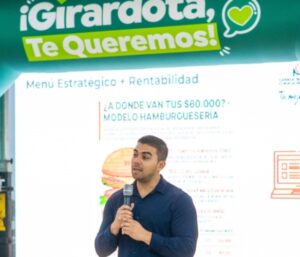
Since formally joining the consultation in January 2026, Pinzón has traversed over 34 cities across 20 departments, spanning from remote southern jungles to eastern plains and major urban centers. His itinerary began in the south, in Nariño and Putumayo, engaging indigenous and rural communities on rural security and sustainable crop substitution programs. In a notable 2,000-kilometer journey over two days from the Pacific to Meta, he held a massive rally in Villavicencio’s Plaza Los Libertadores, where thousands cheered his pledges for regional infrastructure and agro-industrial investments.
In the Caribbean region, visits to Barranquilla, Cartagena, and Santa Marta focused on anti-corruption measures in ports and tourism as job creators. In Medellín and the Coffee Axis (Pereira, Manizales, Armenia), he outlined plans to boost the construction sector with subsidies for decent housing and SOAT adjustments for motorcyclists, acknowledging mobility as essential in mountainous areas. Bogotá hosted multiple forums with local leaders, mayors, and governors, where he advocated for full state support to regions, critiquing centralization and proposing cuts to unnecessary bureaucratic spending to redirect funds to health and education.
In the east, such as Arauca and Casanare, Pinzón addressed border security, drawing on his ministerial experience to promise a firm stance against armed groups without concessions. In the southeast, Caquetá and Amazonas, he dialogued with environmentalists on Amazon protection, integrating ecological proposals into his economic agenda. Overall, these tours not only covered Colombia’s geographic diversity—jungles, plains, coasts, and Andes—but incorporated inclusive discussions with women, youth, Afro-Colombians, and indigenous groups, emphasizing gender equity and social inclusion.
His programmatic proposals, articulated at each stop, center on key pillars: restoring order and security through a “firm hand” policy against criminals, without negotiating with terrorists; creating the ‘Miguel Uribe Turbay’ scholarship to send 2,000 Colombians abroad for studies with a return commitment to apply knowledge domestically; promoting formal employment via fiscal incentives for businesses; eradicating “gota a gota” loans with immediate, accessible microcredits; ensuring access to decent housing through direct subsidies; and reactivating regional economies by trimming superfluous government expenses for critical infrastructure investments.
The campaign’s climax was the apotheotic digital closure, live-streamed on March 1 via X (formerly Twitter), YouTube, and Facebook. With a spectacular audience exceeding 350,000 concurrent viewers—an unprecedented milestone in Colombian political events—Pinzón captivated viewers for over two hours. The event, infused with emotion, featured personal accounts of his achievements in national defense and diplomacy, along with real-time interactions. Celebrities and public figures, including Ingrid Betancourt and Cambio Radical senators, actively participated, inquiring about his plans and amplifying reach. Unlike typical political broadcasts where dropout is common, this session maintained high retention, establishing Pinzón as “the network candidate” and highlighting his digital superiority over competitors like Paloma Valencia and Vicky Dávila.
This closure not only underscores innovation in political communication but solidifies Pinzón’s favorable prospects in the consultation. Analysts agree that his blend of territorial presence and digital prowess sets him apart in a fragmented landscape, where the center-right seeks to unify forces for the May 2026 presidential elections. With a message of unity, security, and progress, Pinzón emerges as a leader capable of mobilizing both traditional bases and the connected generation, setting a new standard in Colombian politics.